Visconti Sforza Tarot Decks
The Origins of Some of the World's Oldest Cards
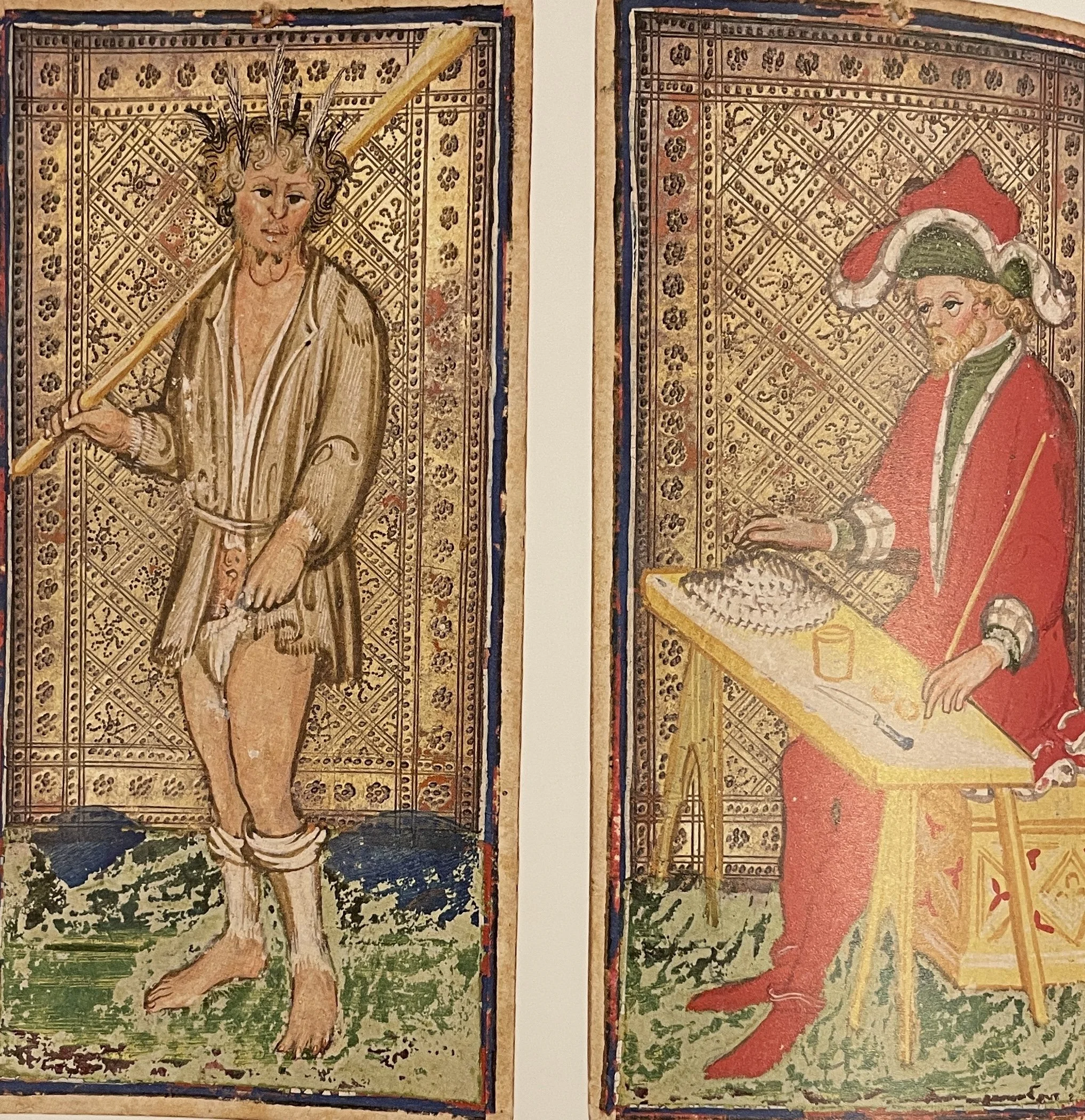
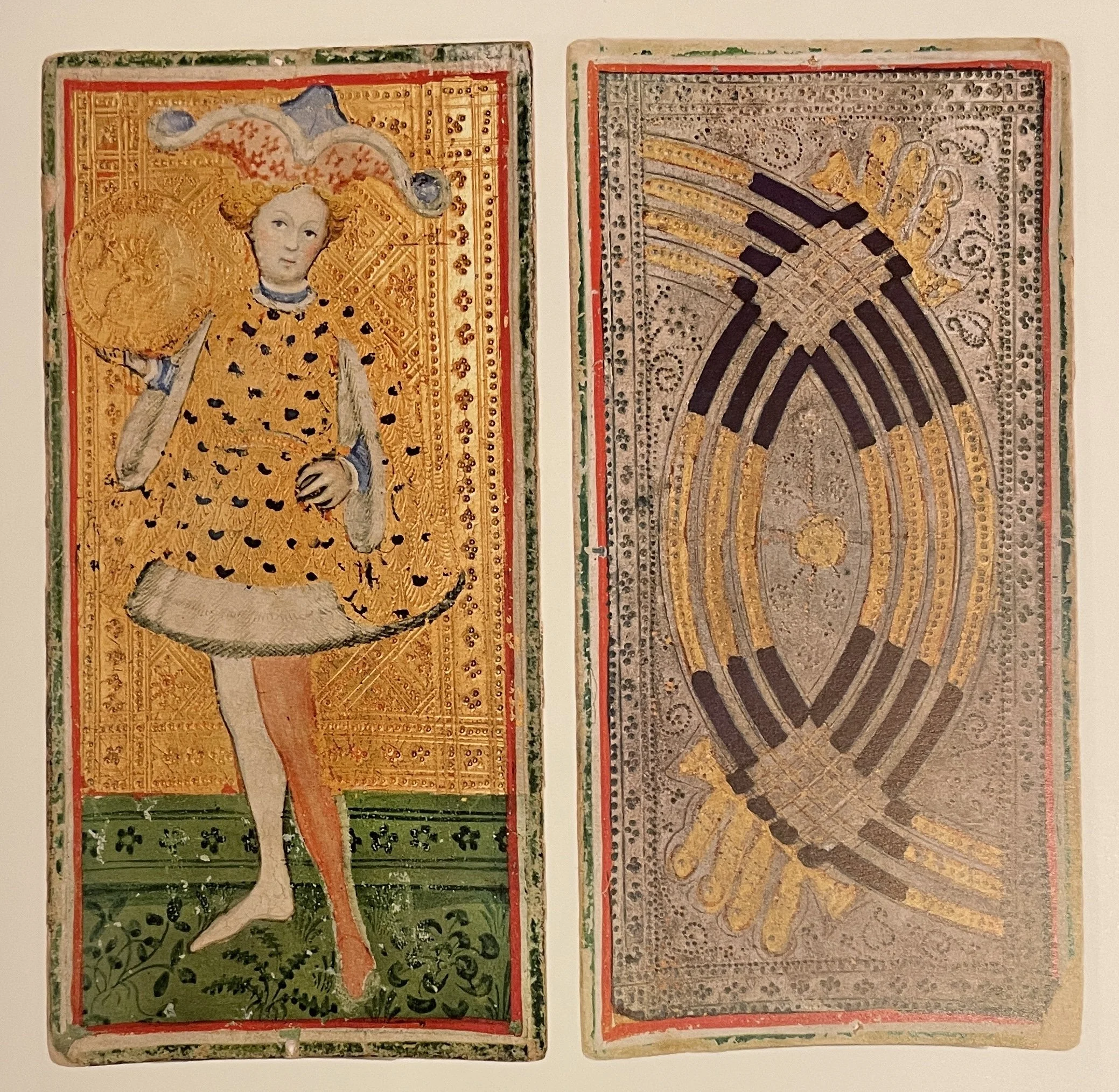
Visconti Sforza Tarot Deck, The Fool and The Magician
The Visconti Sforza tarot decks are hard to define, with their true origins often obscured by myths and misunderstandings. Rather than serving as mystical tools for predicting the future, these cards began as luxurious courtly objects intended to display the pride, wealth, and power of Renaissance Milan’s ruling families. They could never have imagined that centuries later, the occultists and fans would reinterpret their images, eventually turning them into the tarot cards we know today.
These cards represent multiple things at once. Firstly, they are historical relics, works of art; secondly, they are political symbols, games for the elite, and the records of enduring legends. Their surviving pieces are scattered across museums worldwide, including libraries and private collections. They continue to fascinate scholars and cartomancers. Created in fifteenth-century Milan, they are the oldest known tarot cards and showcase some of the finest examples of late Gothic and early Renaissance miniature painting. However, the meanings and narratives attached to them today diverge considerably from their original function.
Let's examine these origins with their artistic qualities, political significance, and changing interpretations to clarify how their intended purpose differed from later popular myths. To fully understand these cards, it is necessary to move beyond the legends and consider them in their historical context: as symbols of power and status in the grand courts of Lombardy, not just tools for fortune-telling.
A Court That Commissioned to Impress
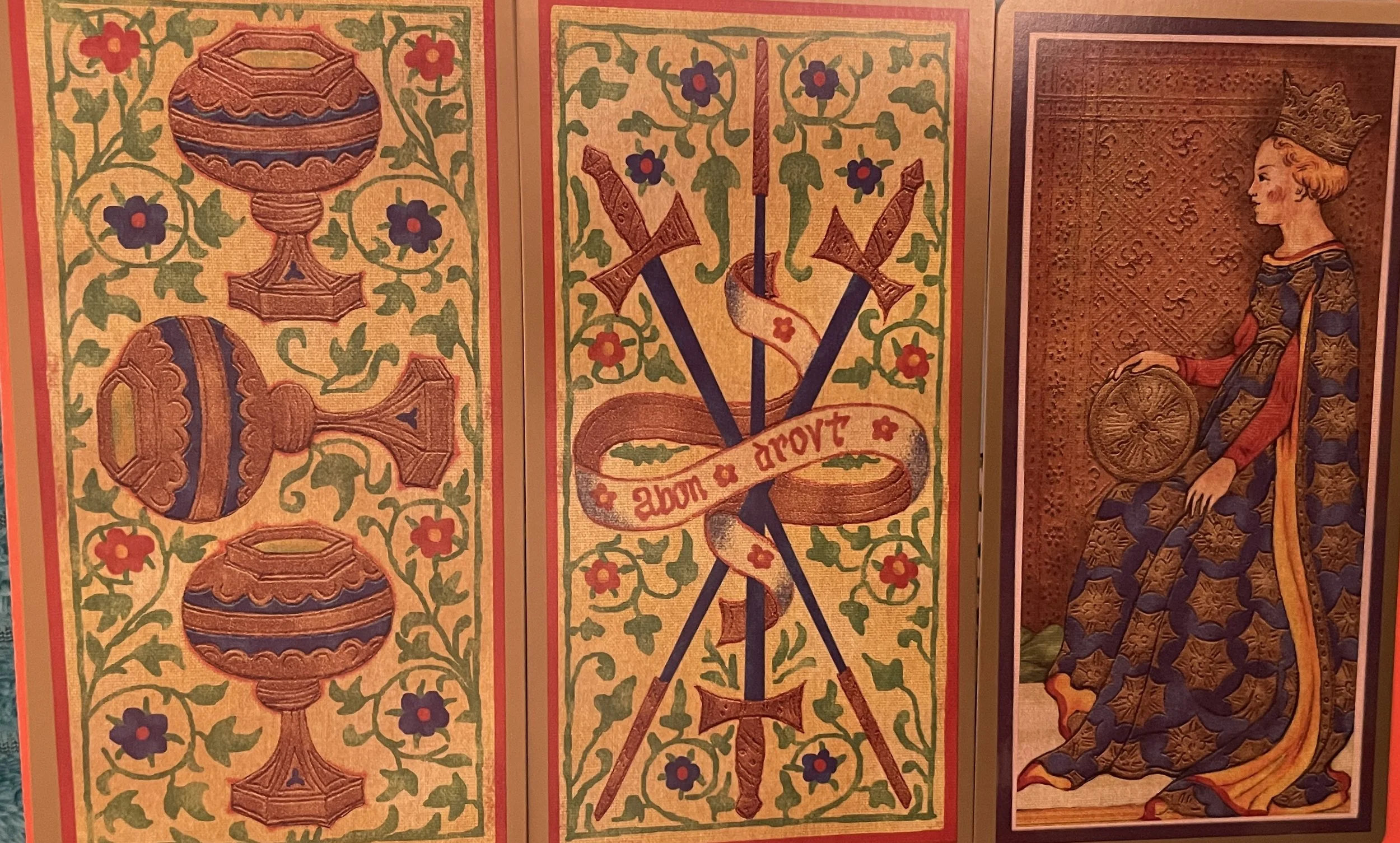
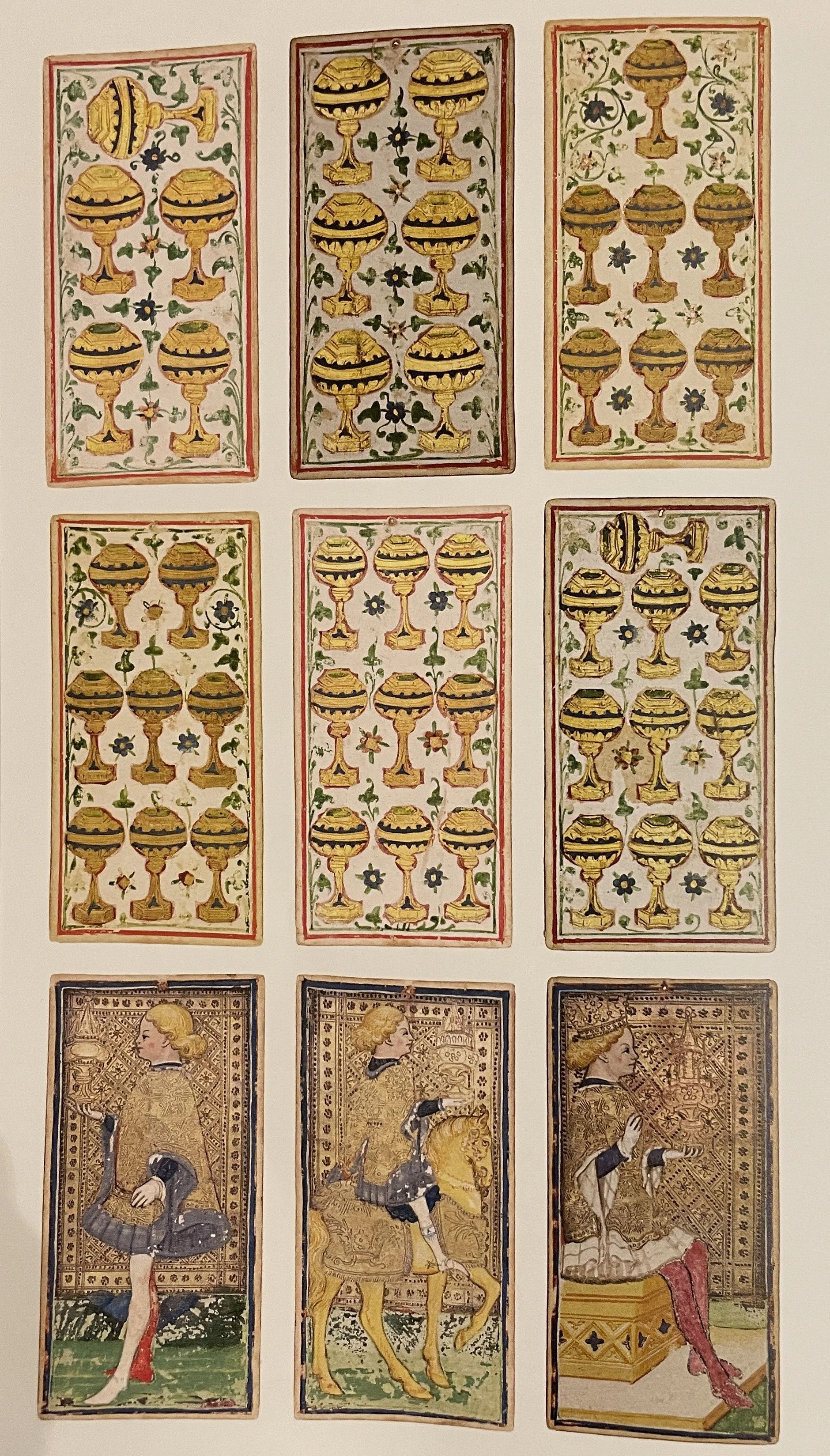
Visconti Sforza, 3 of cups, 3 of wands, queen of pentacles
By the time the tarot decks were commissioned, the Visconti had ruled Milan for over a century. They presided over one of Europe’s wealthiest duchies in the 1430s. Art served a deliberate political language within this society. Filippo Maria Visconti, the last of his line to hold power, was a somewhat unlikely patron. He was reclusive to the point of paranoia. He rarely appeared in public, conducting diplomacy through intermediaries. Despite this, he maintained a powerful presence with his image. Manuscripts, frescoes, and luxury objects produced with calculation were meant as declarations of Visconti legitimacy and right to rule.
To understand the first tarot cards, imagine a luxury item rather than something bought at a market. These were thick cards hand-painted with tempera, gold, and silver. They were crafted by the finest northern Italian artists of the time. These images, including emperors, popes, virtues, and allegories, reflected sermons, celebrations, and poetry familiar to Milan’s nobility. They bore family crests and mottos. Some may have displayed actual portraits of Visconti and Sforza family members in elaborate dress, asserting powerful statements of identity.
The cards were called trionfi, or "triumphs," back then, after allegorical processions. These processions were a favorite form of Renaissance public spectacle. In these pageants, personified virtues, classical gods, and historic figures paraded in order. The cards' first purpose was a trick-taking game, more like modern bridge than fortune-telling. The word tarocchi was used later in the fifteenth century.
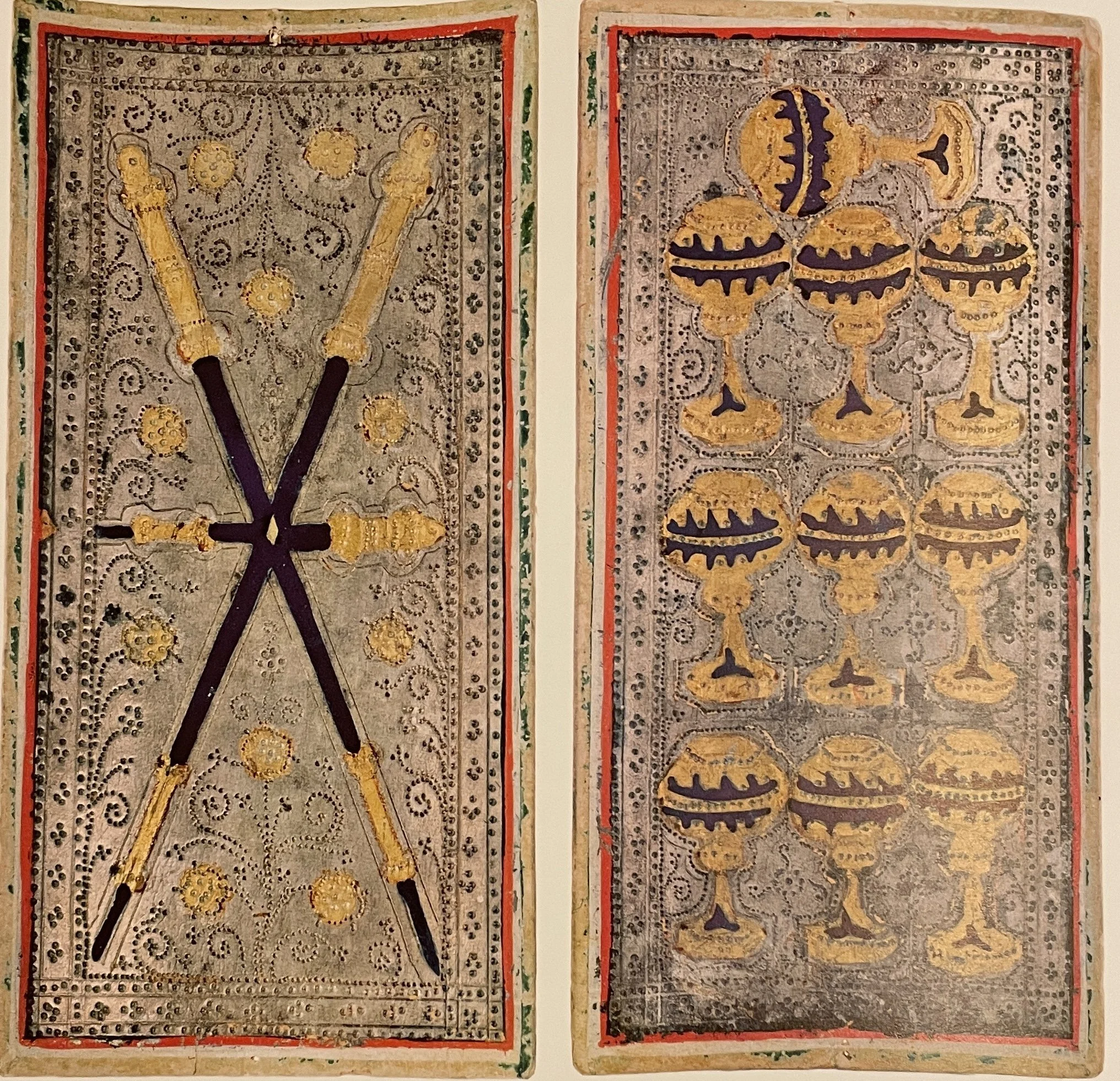
The Three Principal Decks
The term “Visconti-Sforza Tarot” refers to approximately 15 incomplete sets dating from the middle of the fifteenth century, now distributed among museums, libraries, and private collections worldwide. Unfortunately, no single complete deck has survived. Among these fifteen, three are particularly important.
1. The Pierpont Morgan Deck (c. 1451)
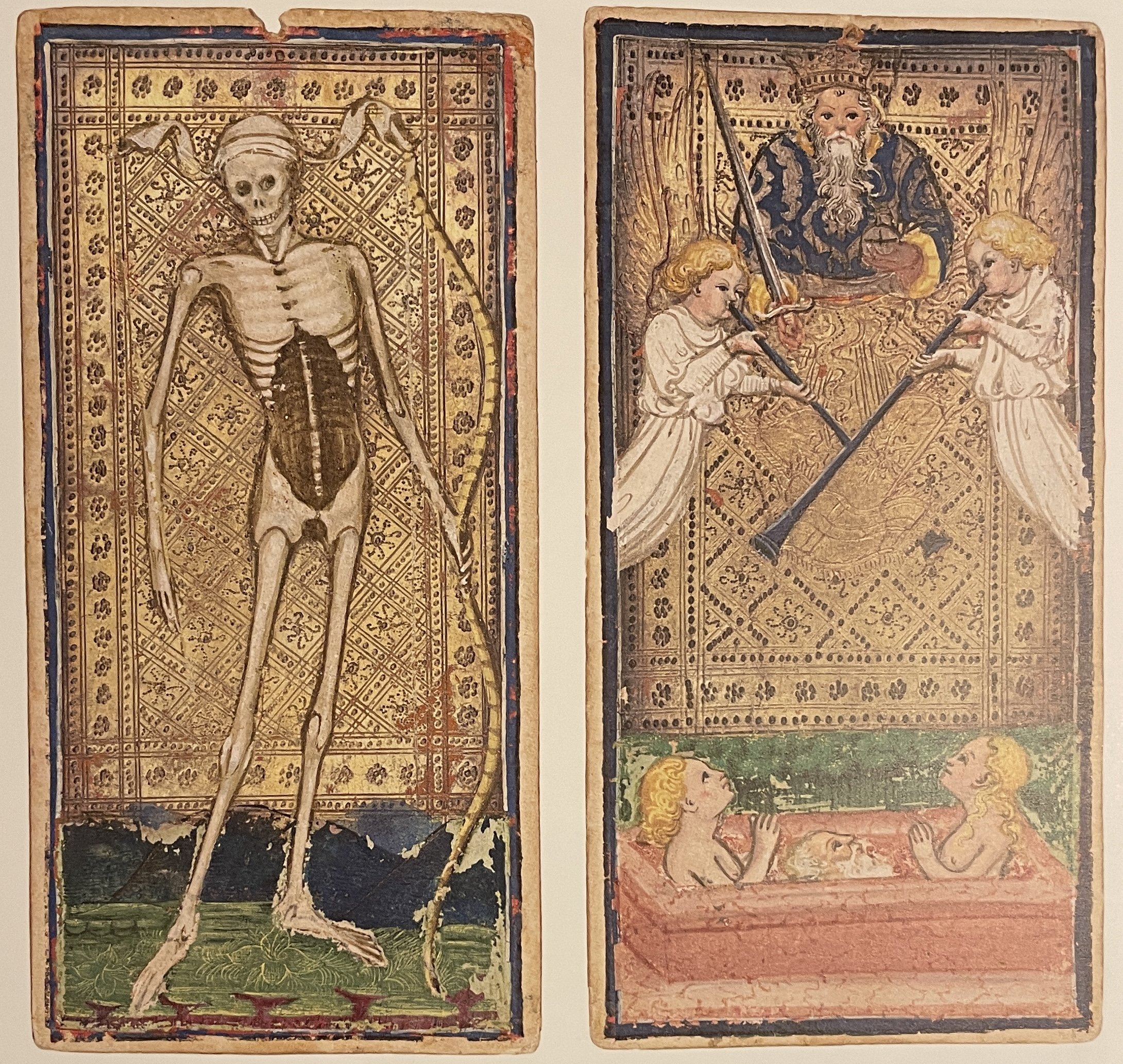
The most complete surviving set was produced around 1451. It is linked to Francesco Sforza, a mercenary commander who married Bianca Maria Visconti, Filippo Maria’s only child. He became Duke of Milan after Filippo Maria. The deck originally had 78 cards. Seventy-four remain. Thirty-five are at the Morgan Library & Museum in New York, twenty-six at the Accademia Carrara in Bergamo, and thirteen in the private Colleoni family collection, also in Bergamo. The missing cards are the Devil, the Tower, the Three of Swords, and the Knight of Coins. These missing cards have sparked some controversy. According to the Morgan Library and Museum, the Visconti-Sforza tarot deck was made in fifteenth-century Italy for aristocratic entertainment. We do not know the exact reasons for the missing cards (lost, removed, or never finished). Researchers offer different theories to explain these missing pieces. One of the most important experts in tarot, Michael Dummett, suggests the cards were lost or damaged after heavy use and simply did not survive. Stuart R. Kaplan believes some cards, especially the Devil and the Tower, may have been purposely excluded or maybe even never created because their imagery might have been seen as controversial or too sensitive for a fifteenth-century Italian court. Recent theories claim that later collectors or censors, uncomfortable with these themes, may have removed the cards. There is no consensus or firm evidence. The continuing debate shows how cultural values shape both the creation and survival of art.
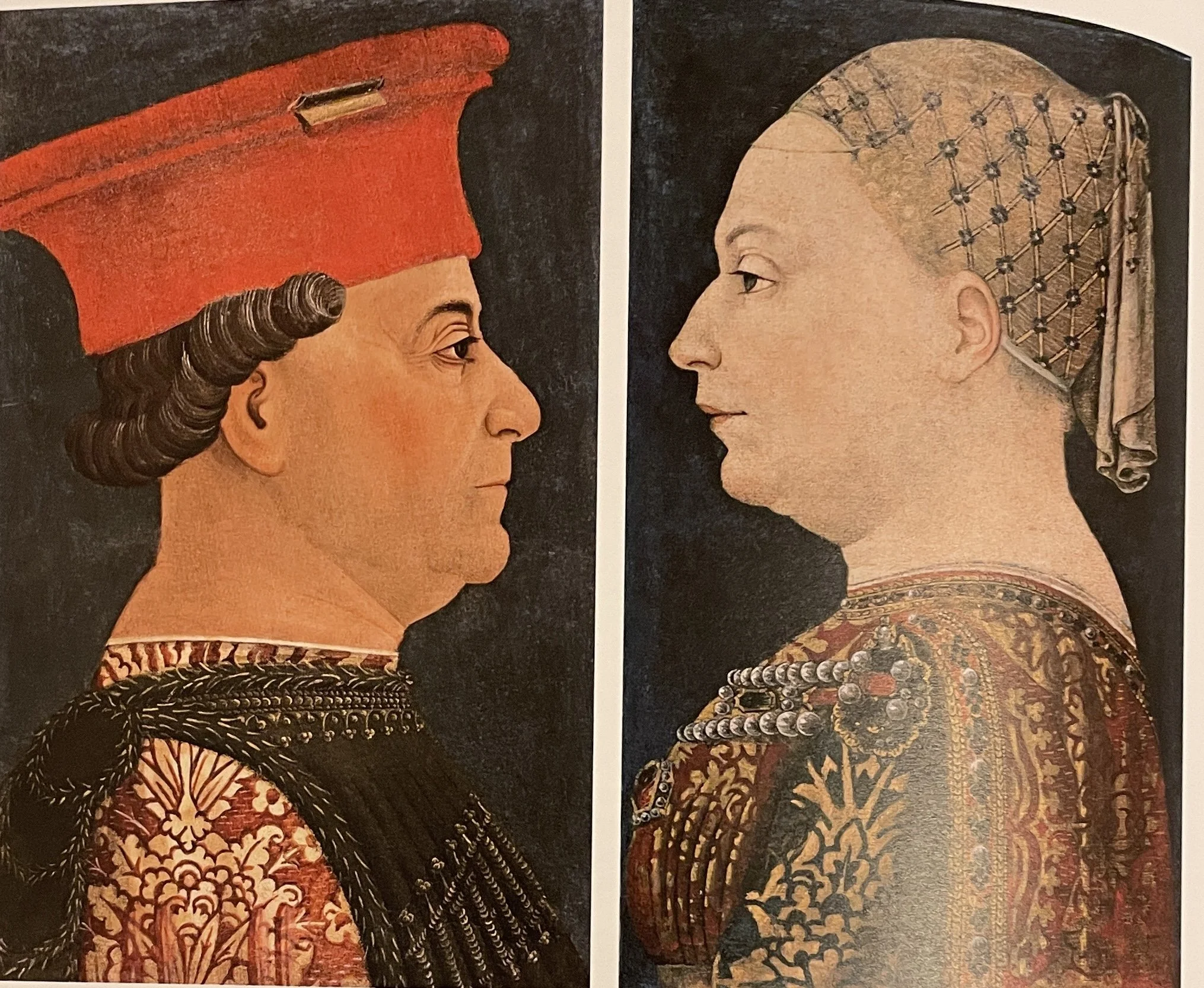
Francesco Sforza and Bianca Maria Visconti
Trump cards radiate with a shiny gold background that conveys magnificence and devotion to artistic tradition, while pip cards feature a soft cream base and are precisely embellished with intricate floral and vine motifs reminiscent of illuminated manuscripts. The visual language of these embellishments reflects late Gothic and early Renaissance aesthetics, evoking the ornamental richness found throughout elite Milanese material culture. In the suit of batons, figures appear in lavish pleated silver garments, a visual strategy that further stresses the sumptuous quality of the decks by invoking contemporary textile fashions and courtly attire.
2. The Cary-Yale (Visconti di Modrone) Deck (c. 1442–1447)
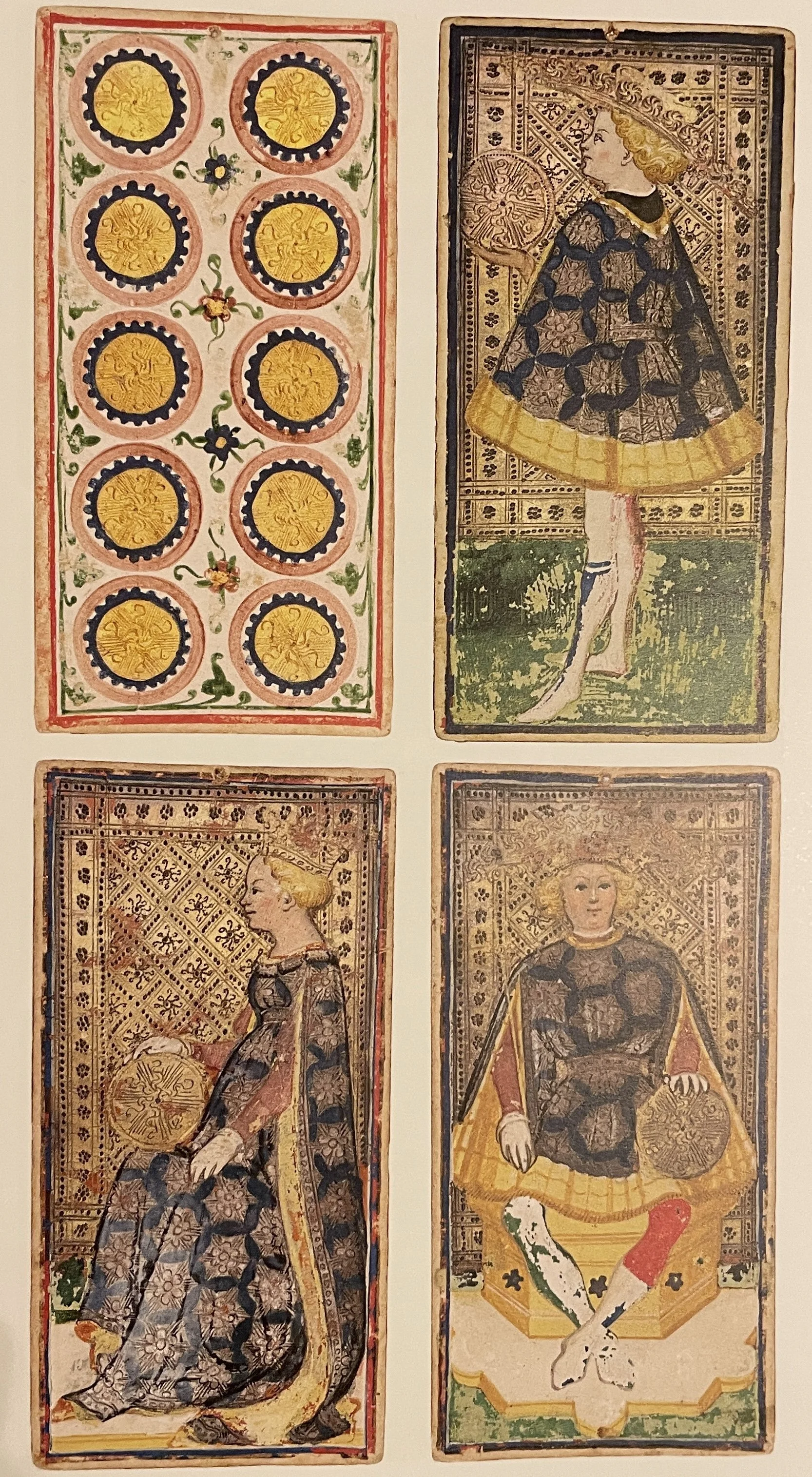
Now at Yale University’s Beinecke Rare Book and Manuscript Library, this deck has unique features. Sixty-seven cards survive, including eleven trumps, seventeen face cards, and thirty-nine pip cards. This deck alone has six ranks of court cards per suit. Each suit features the King, Queen, Knight, and Jack. It also includes a Damsel and a Lady on horseback. The reasons for these extra figures are also debated among scholars. Some think the expanded court mirrored, or even outdid, the pageantry and hierarchy of Milanese court life. This may have been a direct depiction of complex social order and roles within the Visconti household. Others believe the extra female figures honored prominent Visconti and Sforza women. Some think it made the game more appealing or functional for female members. There is also a possibility that the different court structure was an experiment for a more complex game or to allow new forms of play.
Scholars have proposed many dates for this deck. Numismatist Giordano Berti, in The History of the Tarot, believes Filippo Maria Visconti depicted the coin (denari) cards in 1442. He thinks they were withdrawn in 1447, when Filippo Maria died. This gives the earliest and latest dates for at least part of the deck’s creation. (Berti & Gonard, 2002)
3. The Brambilla Deck (c. before 1447)
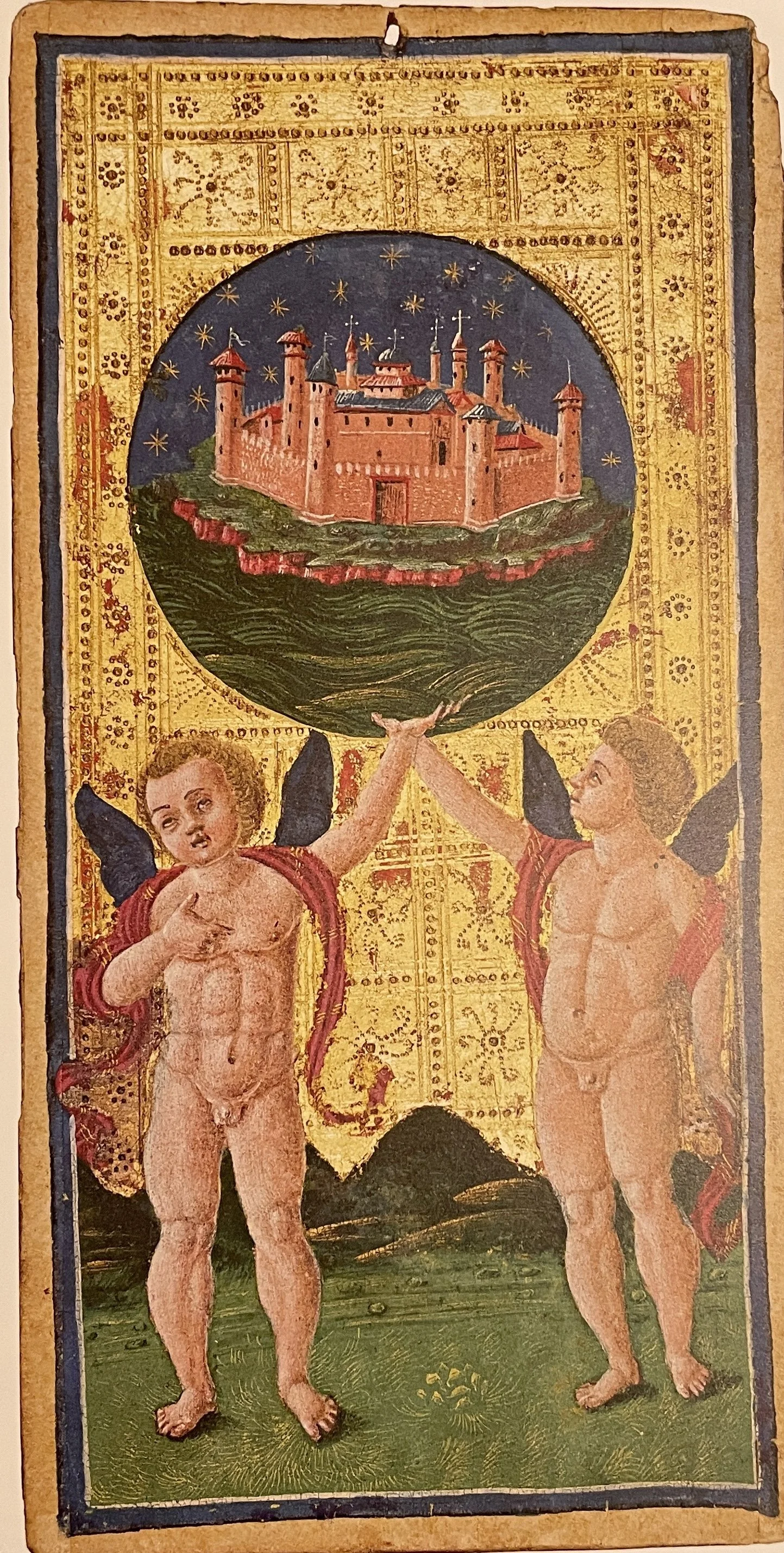
This is the most fragmentary of the three main sets. It is named after Giovanni Brambilla, who acquired the cards in Venice in 1900. Since 1971, the deck has been at the Pinacoteca di Brera in Milan. Of the first set, only forty-eight cards survive. Just two trumps are left: the Emperor and the Wheel of Fortune. All face cards have a gilt background. Pip cards have a silver ground. Art historians consider this deck to have been painted before Filippo Maria’s death in 1447. That makes it potentially the earliest, though the evidence is not conclusive.
Bonifacio Bembo and the Question of Authorship
The artist most closely linked to these decks is Bonifacio Bembo. He was a court painter from Cremona who worked for both the Visconti and Sforza families. His activity covers roughly 1442 to before 1482. His name is tied to the decks by style and court records. Payment records from the Visconti court show Bembo’s commissions for painting projects, including cards. Art historians also note Bembo’s unique style: delicate faces, long figures, and detailed backgrounds. These traits closely match the Visconti tarot cards. The idea of sole authorship is complex. Evidence shows that several hands worked on the surviving cards, suggesting some workshop involvement. (Moakley, 1966)
Bembo’s style combined the detailed precision of late Gothic art with the emerging naturalism of the early Renaissance. The faces on the court cards display a distinct individuality that has led some scholars to interpret them as portraits, rather than generic representations. For instance, the Queen of Swords is frequently associated with Bianca Maria Visconti, showing a practice common in Renaissance courts where commissioned artworks often incorporated the likenesses of prominent family members to reinforce dynastic identity and memorialize individual status. Even if such identifications remain speculative, their plausibility suggests that these cards served as both luxury objects and subtle vehicles for personal and political representation. In this way, the artists responded to their patrons' expectations and sociopolitical realities, embedding real-world references into the iconography alongside established motifs.
The Structural Legacy
Whatever the circumstances of their commission and use, the Visconti decks established a structural template that has proved durable. The format includes 22 trump cards, four suits, and fourteen cards per suit: numerals 1 through 10 plus 4 court cards. This structure became the standard form of the tarot. The Marseille tradition adopted it in the sixteenth and seventeenth centuries. The Rider-Waite-Smith deck retained it in 1909. That deck is still the most widely reproduced tarot format in the world.
It is impressive that the structure of the tarot has stayed the same, even though the meanings of the cards have changed a lot over time. In the fifteenth century, the Emperor and the Pope stood for worldly and spiritual power. By the nineteenth century, French occultists connected them to Kabbalistic ideas and astrology. (Kabbalistic Order of the Rose-Cross) The earliest artists most probably would not have imagined these later meanings.
The Mythology That Grew
No account of the Visconti decks would be complete without addressing the elaborate mythology that has accumulated around tarot from the late eighteenth century onwards. Such mythology still shapes popular understanding today.
In 1781, the French scholar and antiquarian Antoine Court de Gébelin published a speculative essay. He claimed that tarot cards were surviving pages of an ancient Egyptian sacred text, the Book of Thoth, supposedly carried into Europe by traveling peoples. The tale was wholly without foundation; no credible Egyptological evidence has ever supported it. Still, the story arrived at the right moment. At the time, European culture was hungry for wisdom traditions and the romance of recovered secrets. The idea spread rapidly and proved almost impossible to dislodge.
The Egyptian myth was succeeded and amplified by successive layers of occult interpretation. Jean-Baptiste Alliette published the first deck designed explicitly for divination in 1789 (Grand Etteilla Deck by simply writing his last name backward). Éliphas Lévi linked tarot to the Kabbalah in the 1850s. The Hermetic Order of the Golden Dawn produced its own esoteric tarot system in the late nineteenth century (The Golden Dawn Deck). By the time Arthur Edward Waite and Pamela Colman Smith created their famous deck in 1909, the transformation remained complete. A fifteenth-century Italian card game had become, in the popular imagination, an ancient oracle of secret wisdom.
None of these occult ideas originates from the world of the Visconti cards. The people who made them lived in a Catholic, courtly Renaissance society, in which every symbol carried meanings specific to its particular historical moment. This historical specificity does not diminish the cards’ intriguing power; rather, it intensifies their historical, philosophical, and religious complexity. By noting that the Morgan Fool or the Cary-Yale Empress was designed for particular individuals by particular artists within a defined cultural context, we can better understand how contemporary perceptions of the tarot (as timeless and universally symbolic) often obscure the cards' original roles as personal, political, and aesthetic artifacts. Thus, tracing these origins links the gap between their historical importance and their lasting allure in modern imagination.
These decks survived wars, political upheavals, and the simple attrition of time because they were expensive and kept as treasures. (Dummett, 1986) They survive now in the careful custody of institutions that recognize them for what they are: among the most significant objects in the history of Western visual culture, and the unlikely origin of a tradition that shows no signs of ending.